Last week, we established that achieving the Triple-C Flow State (Comfortable, Competent, and Confident) is the goal for presentation performance. We explored the biological “Hardware Failure” of speaker anxiety and the COAP Protocol required to keep your prefrontal cortex online. However, a more subtle trap exists that even poised presenters fall into: the “Relevance Gap.”
If the COAP Protocol ensures your body is ready for the stage, clearly identifying the true problem your analysis attempts to solve ensures your message aligns with audience needs. In the art and science of analytics, technical rigor is wasted if applied to the wrong question.
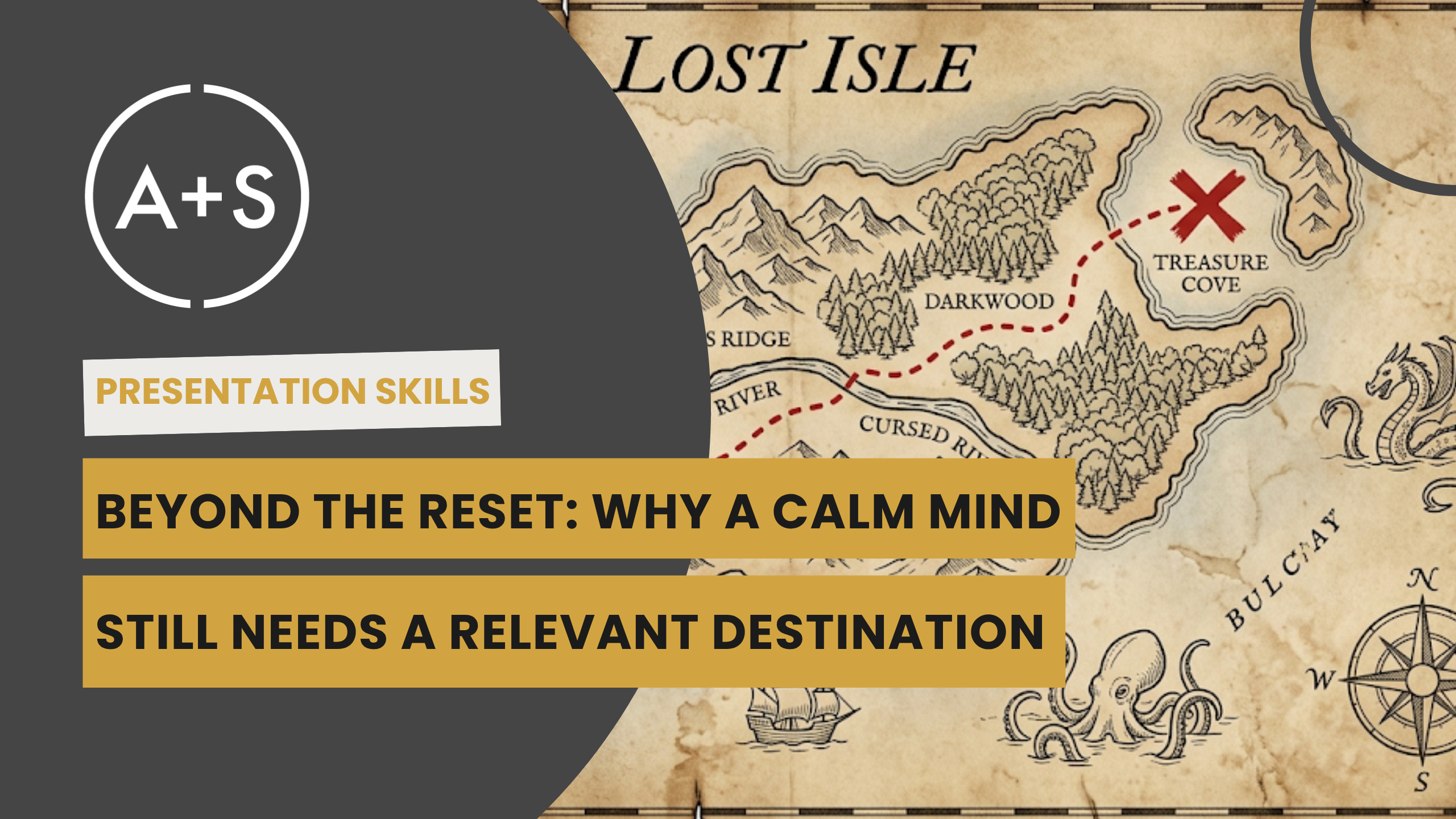
To ensure your presentation hits the mark, you must look past the surface request that initiated your analysis to find the business challenge hidden beneath. This is “The Ask Behind the Ask.”
The Cost of the “Surface Ask”
Stakeholders are often talented business leaders but are typically not trained analysts. They lack deep data understanding, have not been trained to derive insights from data, and lack experience with analytical tools. Consequently, the request stakeholders make to the analyst is rarely the actual problem; it is their best guess at a solution for a business problem they may not fully understand.
When you fulfill a stakeholder’s “surface ask” literally, you risk spending dozens of hours on a masterpiece that no one needs. Confidently delivering an answer to the wrong question signals that you are technically proficient but strategically disconnected. To provide true value, you must treat every request as a low-resolution proxy for a higher-stakes decision. By pausing to identify the actual business friction, you ensure your analysis is the precise key that fits the stakeholder’s specific lock. You move from providing “interesting” data to “clinical” evidence that drives a massive strategic pivot.
The 3 Pillars of Strategic Alignment
To ensure your analysis remains aligned with strategic intent, move through 3 process stages before you pull a single row of data:
- Uncover the “Why” (The Trigger): Treat every request as a symptom. Determine what specific pressure or competitive shift prompted this query. Use your strategic understanding of the business to find the pain point the stakeholder seeks to resolve.
- Translate “Why” into “What” (The Impact): With the trigger exposed, identify the strategic stakes that come from solving the problem. This elevates the conversation from a minor inconvenience to a quantified business pain.
- Define the “How” (The Plan): Once the true business pain is understood, design the analytical plan. This is where your understanding of data determines the metrics that matter. You are not just pulling data; you are architecting a solution.
By mastering this diagnostic phase, you protect your work from being dismissed as “interesting but not useful.”
Theory to Practice
To ensure your next analysis hits the mark, perform this 5-step audit before project initiation:
- Schedule a Live Discussion: Decline complex requests via email. Schedule a face-to-face or call to signal that the request is a strategic priority that requires detail beyond the surface.
- Identify the Catalyst: Ask your stakeholder, “What specific challenge prompted this request today?” This forces them to articulate the friction that started the fire.
- Quantify the Pain: Ask, “If this problem is unsolved, what is the immediate risk to our business?” This allows you to understand the impact of your analysis and the urgency of the solution.
- Map the Path Forward: Ask, “Once we have this answer, what specific decision or pivot will you make?” Identifying the destination allows you to architect the correct analytical plan.
- Confirm the Mandate: Before ending the discussion, re-state the problem: “So the goal here is not [Surface Ask], but rather to [Strategic Objective] so that we can [Business Outcome]. Is that correct?”
By securing this alignment, you ensure that your “Triple-C” presence is matched by a “Triple-A” message: Accurate, Actionable, and Aligned.
Until next week, Keep Analyzing!