Last week, we established that a brand is not a nebulous “vibe” but a clinical architecture designed to generate equity.
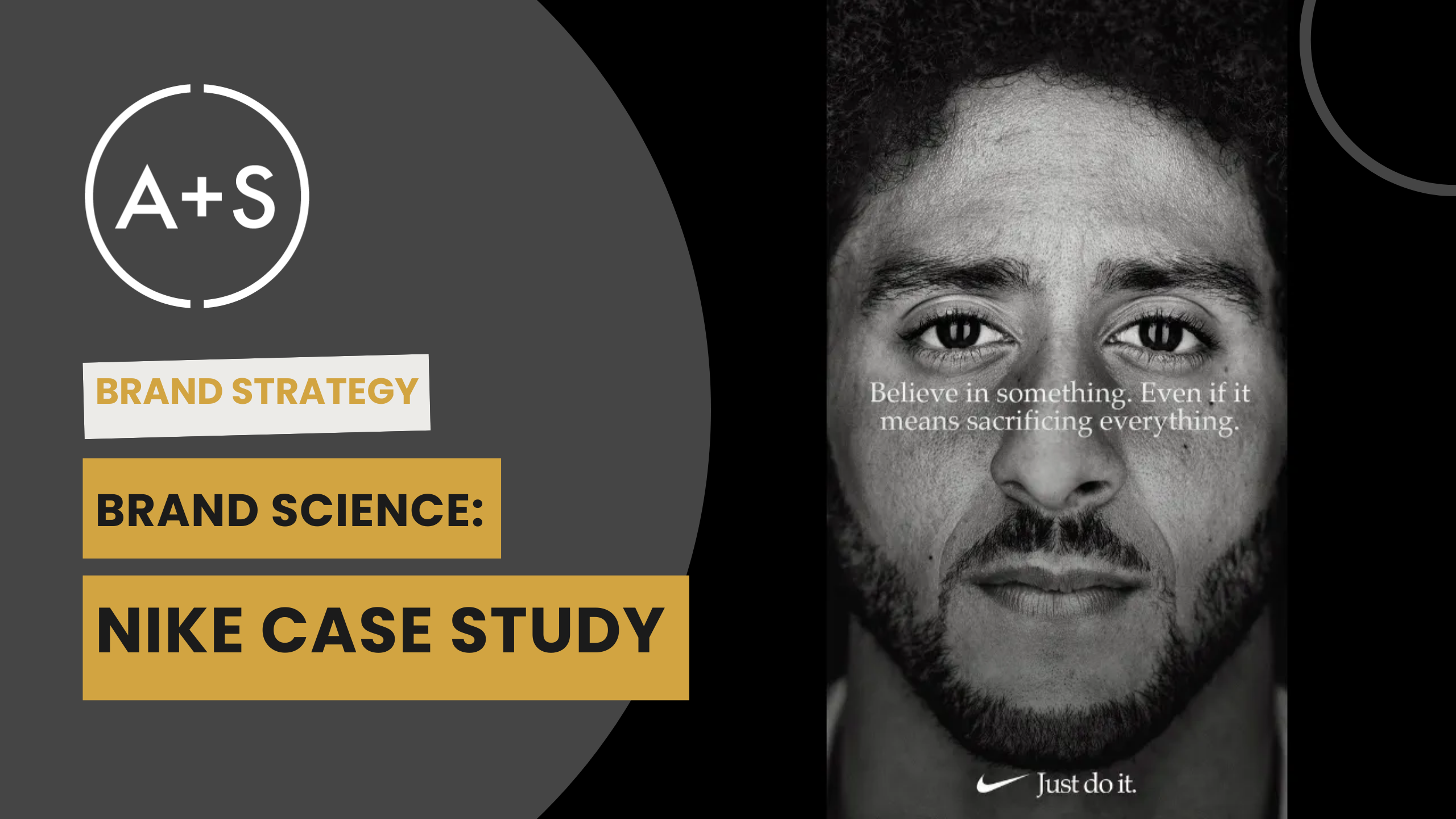
We defined Brand Science as the deliberate synthesis of Relevance, Differentiation, and Sustainability. To see this architecture in its most potent form, we can look at Nike’s 2018 “Dream Crazy” campaign featuring Colin Kaepernick.
While the public saw a high-stakes political risk, the strategic architect saw a masterful audit of Brand Science. Nike did not guess; they practiced Calculated Boldness.
Engineering the Architecture of the Irrational
In September 2018, the United States was at a cultural flashpoint. Colin Kaepernick had become a lightning rod for national debate after kneeling during the national anthem to protest systemic racism. When Nike released its ad featuring a tightly framed image of Kaepernick staring resolutely into the camera with the headline, “Believe in something, even if it means sacrificing everything,” the immediate reaction was visceral.
Critics burned their Nike gear in protest, and the company’s stock price initially dropped nearly 3 percent. To the casual observer, it looked like a catastrophic misstep. Yet when viewed through the lens of Brand Science, the move was a clinical execution of the principles we discussed last week.
Nike’s success demonstrates that a brand is a strategic asset that enables organizational strategy, rather than a popularity contest. By applying the pillars of Brand Relevance and Brand Loyalty, Nike identified that its future growth depended on a specific, high-value segment. The results were economically transformative. Only 1 week after the advertisement aired, Nike’s online sales jumped 31 percent. Within months, the company’s stock hit an all-time high.
This is the Architecture of the Irrational in practice. By aligning its identity with the self-expressive benefits of its most loyal segments, Nike created an economic moat that justified a massive price premium and record-breaking growth.
Finding the Signal in the Noise
The role of the modern brand strategist is to act as the bridge between raw sentiment and strategic action. In the Kaepernick case, Nike faced a profound dilemma. They recognized that featuring such a controversial figure would alienate a portion of the public, yet they proceeded with Calculated Boldness. This was not a blind leap; it was a clinical assessment of audience value.
The Brand Science angle reveals that Nike had identified the true source of its equity. The individuals most offended by the campaign were often those with the lowest lifetime value (consumers who might buy one pair of shoes every few years to mow the lawn). In contrast, its supporters were Nike’s high-value segments: athletes and brand enthusiasts who purchase multiple pairs each year and deeply embody the “Just Do It” ideal. Nike’s leadership understood that a brand cannot be all things to all people.
The Nike Audit: 3 Pillars of Brand Science
To apply this to your own portfolio, analyze the Nike strategy through the 3 pillars of Brand Science:
- Relevance (Strategic Segment Valuation): Nike distinguished between high-frequency, high-margin loyalists and low-frequency, low-margin consumers. They recognized that universal approval is often the enemy of deep relevance.
- Differentiation (Benefit Resonance): The campaign was designed to activate specific emotional and self-expressive benefits. For the core athlete, supporting Kaepernick was an act of personal conviction that transcended the functional utility of a shoe.
- Sustainability (Predictive Response): Nike modeled how each segment would respond. They understood that the negative sentiment from non-target segments was a necessary byproduct of securing the unwavering loyalty of their most valuable customers.
Theory to Practice
To transform your own brand into a strategic asset this week, I challenge you to perform the following Calculated Boldness audit:
- Identify the “Lawn Mower” Segment: Review your current audience. Who are the vocal detractors who contribute the least to your bottom line? Map their influence versus their actual lifetime value.
- Audit for Self-Expressive Resonance: List 3 ways your product allows your high-value customer to signal their identity to the world. If you can only list functional benefits, your brand architecture is incomplete.
- Quantify the Trade-off: Identify 1 strategic move your firm has avoided because it was “too risky.” Use your analytics to calculate the potential gain from your top 10 percent of consumers versus the loss from the bottom 50 percent.
- Model the Reaction: Before your next campaign, map out how your high-value versus low-value segments will react to the emotional cues.
Navigating these trade-offs is the hallmark of the brand strategist. By applying these frameworks, you ensure that every action is a clinical reinforcement of your core identity. The complexity of your brand data is the raw material; the science of its architecture is the tool that extracts the value.
Until next week, Keep Analyzing!