The prevailing narrative today is that artificial intelligence will soon automate entry-level roles out of existence. Studies throughout 2024 and 2025 reported sharp declines in traditional junior opportunities. Anthropic CEO Dario Amodei noted that AI could eliminate half of all entry-level white-collar jobs within 5 years, while Goldman Sachs warned that AI could displace 300 million jobs by hollowing out junior-level functions. This has created paralysis for many aspiring analysts who fear their technical skills will be obsolete before they are mastered.
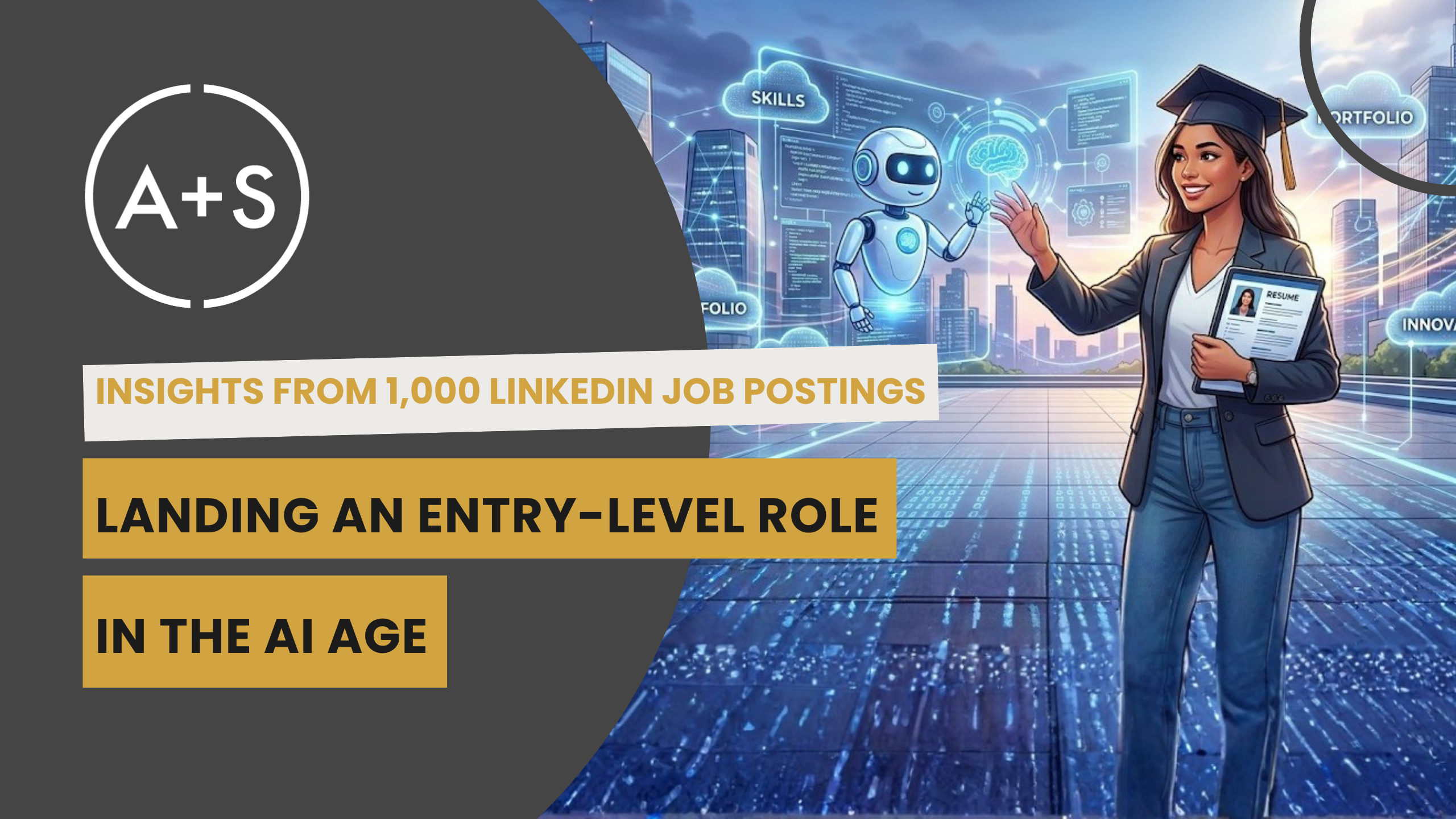
We recently analyzed 1,000 entry-level digital marketing and analytics job postings on LinkedIn to see if this fear is justified. The data shows that while AI is changing the workflow, human-led execution remains the priority for hiring managers. To get hired today, you must master the technical basics the market demands and commit to the in-person learning required to master the judgment AI cannot replicate.
The Tactical Floor of the Market
The data from these 1,000 postings tells a clear story. Despite the constant talk about advanced automation, the most important skills remain the basics. Organizations are looking for practitioners who can handle the daily work that AI cannot yet manage independently.
Here are the top requirements found in the research:
- Excel: 631 mentions (63 percent)
- Social Media: 373 mentions (37 percent)
- CRM (Salesforce/HubSpot): 303 mentions (30 percent)
- SEO/SEM: 183 mentions (18 percent)
- Google Analytics: 140 mentions (14 percent)
Only 2 percent of these roles mentioned advanced AI development. This means your first job is not about building machines; it is about using tools like Excel and Salesforce to manage data. These technical skills are your foundation. You cannot judge if an AI answer is valid if you do not understand how the data was collected and organized in the first place.
Using Human Judgment to Realize the Promise of AI
AI is now excellent at the mechanical parts of an analyst’s role, such as writing code, cleaning data, and summarizing findings. Because these tasks are now automated, the value of a human analyst has shifted. You are no longer just a “calculator” who produces numbers; you are a “curator” who decides which numbers matter and what they actually mean for the business.
This change has turned entry-level roles into “world-building” positions. In the past, a junior analyst might have spent weeks manually sorting through data. Today, you spend that time designing the specific “world” for an AI to explore. This involves creating detailed profiles of specific customer types or setting up unique business scenarios for the AI to test. By building this context, you help the machine produce insights that are deeper and more relevant than a generic search.
Because AI handles the repetitive work, you can begin contributing to high-level strategy much faster than previous generations. You no longer have to spend years doing “grunt work” before getting a seat at the table. Your role is to bridge the gap between automated logic and the reality of human behavior.
The Importance of Showing Up
Developing this level of judgment requires a shift in how and where you work. While remote work is a popular topic, our analysis shows that entry-level roles are moving back to the office to facilitate better training and human connection.
Our analysis of workplace types for 1,000 entry-level roles reveals the following distribution:
- On-site: 56.70 percent
- Hybrid: 26.04 percent
- Remote: 17.26 percent
With 82 percent of roles requiring a physical office presence, proximity has become a strategic advantage. This shift is happening because judgment is often learned through observation and professional “osmosis.” Research from Robert Half indicates that remote roles for new marketers have dropped to just 9 percent of new postings. Furthermore, data from Stanford economist Nick Bloom shows that remote workers receive 25 percent less feedback than their on-site peers. Presence allows you to absorb the human side of the business, including stakeholder politics and client nuances, which AI cannot replicate.
Theory to Practice
To land an entry-level role and use AI to accelerate your job search and career, execute these 4 tactical audits this week:
- Master the Entry Ticket: Prioritize certifications in Excel, HubSpot, and Google Analytics 4. These are mentioned in nearly two-thirds of entry-level postings and prove you can handle the daily work.
- Strengthen the Human Loop: For every AI output you receive this week, identify 1 reason why the machine might be technically correct but strategically wrong. This exercise helps you see your unique value as a human who understands business context in a way the model does not.
- Practice “World-Building”: When using AI, do not just ask for an answer. Take the lead in defining the specific business goals and human motives that direct the AI toward a better solution. Use AI as a tool that amplifies your abilities, not as a replacement for them.
- Market Your Desire for Presence: During interviews, explicitly state your preference for in-person or hybrid collaboration. Frame it as a strategic choice to accelerate your growth by learning the real-world business context and strategy that happen in the room—the kind of nuanced insight that AI cannot access or replicate.
- Target the High-Volume Hubs: Focus your job search on major cities like New York, Atlanta, and Nashville. Since only 17 percent of roles are remote, you will find the most opportunities and the best mentorship in these physical office centers.
Until next week, Keep Analyzing!