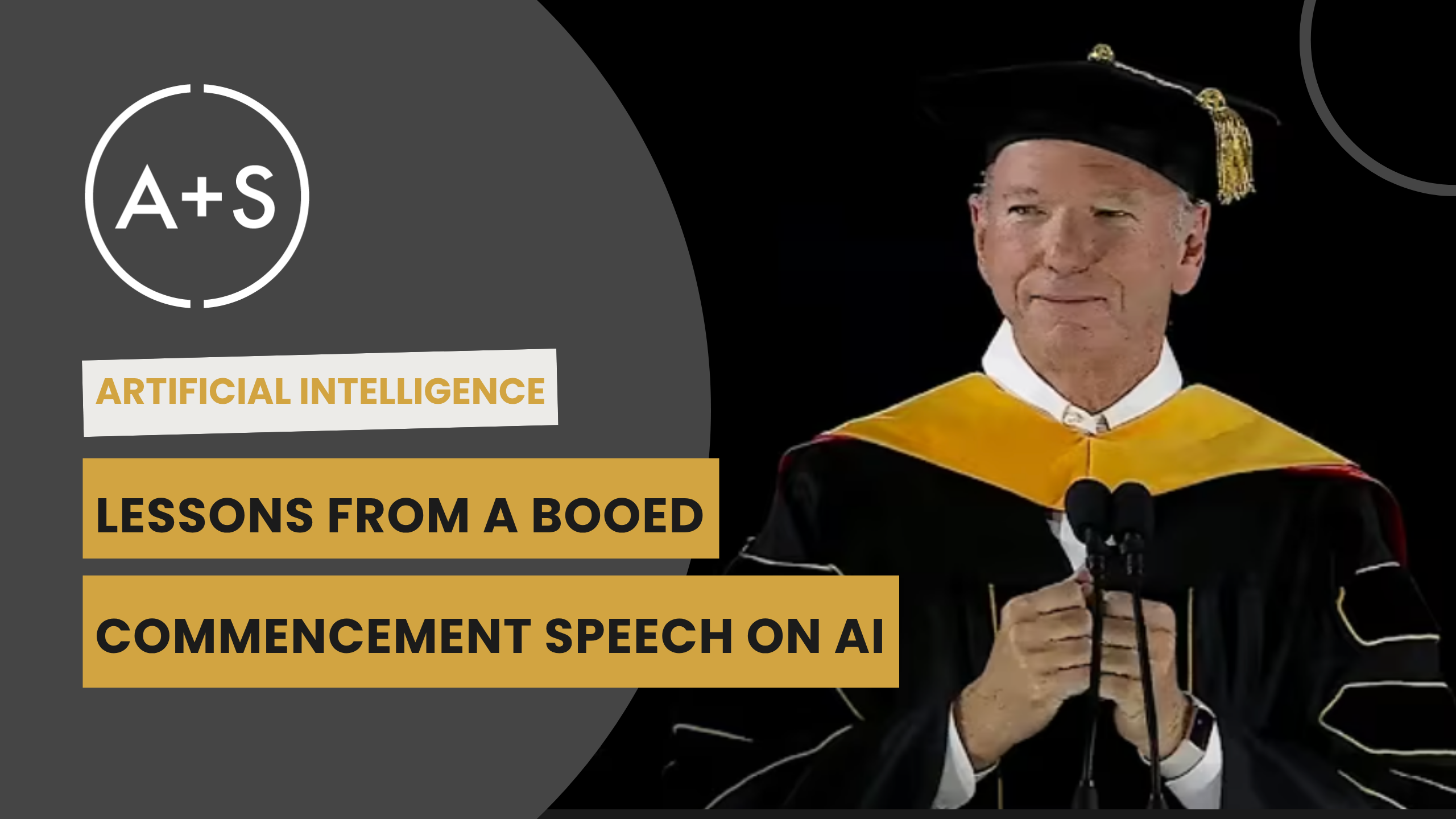
Last week, former Google CEO Eric Schmidt delivered the commencement address at the University of Arizona. He beseeched graduates to actively shape the inevitable rise of artificial intelligence. Schmidt knows more about AI than almost anyone, and there is a lot we can learn from his perspective.
Yet, as you have probably seen, his remarks on the grand future of technological transformation were met with loud boos from the graduating students.
This sharp confrontation highlights a deep divide between technical optimism and economic anxiety. It also provides three important lessons from Schmidt’s experience that every businessperson must understand to navigate their career today.
1. Schmidt was right
During his speech, Schmidt argued that treating the future of technology as a fixed conclusion means surrendering your personal agency. He was entirely correct. For any professional, learning to command AI tools and understanding the exact role humans play alongside them is essential.
This technological shift will touch every professional environment. The future is actively being built by individuals who lean into these changes and develop technical mastery, not by those who ignore the tools out of fear or rail against them in anger.
You must assert your agency by actively adopting AI capabilities. Your professional success depends on it.
2. The students were right
At the same time, the anxiety expressed by the graduates is completely rational and should be expected. The current entry-level job market is incredibly tight, but the reason behind this slowdown is frequently misunderstood.
AI is not stalling hiring because algorithms have instantly replaced human workers. Instead, the rapid advancement of the technology has created immense corporate uncertainty. Because corporate leaders cannot be certain of their one-year operational plans, they pause hiring initiatives.
The difficult employment market is a direct byproduct of corporate planning paralysis rather than immediate human replacement.
3. Always read the room
The most important lesson from this incident is the need for all of us to read the room, especially when it comes to AI. Whether driving AI within your own company or for your own personal use, accelerating the adoption of these tools introduces complicated implementation challenges. These include training needs and system integration barriers, alongside serious ethical considerations like data privacy risks and algorithmic bias.
If you attempt to implement an AI tool solely based on its technical efficiency while ignoring the cultural readiness, system integration barriers, or ethical anxieties of your colleagues, your initiative will fail. That approach is tantamount to telling a room full of anxious graduates facing a paralyzed job market that they should embrace AI because “it’s the future.”
True success requires deep situational awareness. You must evaluate the operational challenges and ethical considerations before you can successfully guide stakeholders (or yourself!) through an AI deployment.
Theory to Practice
To apply these lessons to your own professional practice this week, utilize these three tactical audit points:
- Spend two hours this week testing a new AI application for some purpose relevant to you—data cleaning, visualization, etc.—to ensure you are getting hands-on with the technology.
- Write down two nontechnical anxieties or operational constraints you or your stakeholders are facing with regards to AI today to acquaint yourself with close-to-home AI challenges.
- Develop a plan to explicitly address those pressures, ensuring that you “read the room” before discussing the use of AI in your own workflow or across your organization.
Until next week, Keep Analyzing!